
Soybean nutrition management changes significantly after nodulation. Once effective nodules are established, soybeans can fix a large portion of their nitrogen from the atmosphere. However, this does not mean fertilizer inputs are no longer important. On the contrary, proper soybean fertilizer strategies after nodulation play a critical role in pod development, seed filling, and final yield stability.
Understanding what nutrients soybeans still need—and when they need them—is essential for efficient fertilizer use and profitable production.
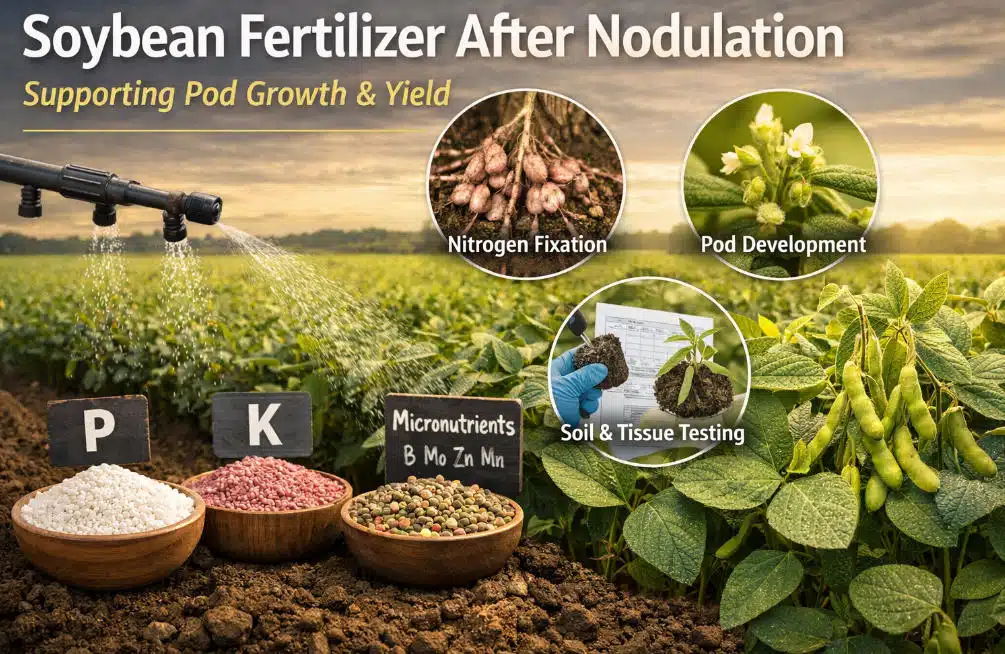
What Happens After Nodulation in Soybeans?
Nodulation typically occurs during early vegetative stages when soybean roots form a symbiotic relationship with rhizobia bacteria. After nodulation becomes active:
- Atmospheric nitrogen fixation increases
- Dependence on soil-applied nitrogen decreases
- Demand for other nutrients (especially phosphorus, potassium, and micronutrients) rises
At this stage, nutrient balance matters more than nutrient quantity. Many yield limitations after nodulation are not caused by nitrogen shortage, but by imbalanced fertilizer programs.
Do Soybeans Still Need Nitrogen After Nodulation?
This is a common question among growers searching for soybean fertilizer after nodulation.
In most cases, additional nitrogen fertilizer is not recommended once nodules are functioning well. Excess nitrogen can even suppress biological nitrogen fixation and reduce nodulation efficiency.
However, nitrogen supplementation may be considered when:
- Nodulation is poor or uneven
- Soil organic matter is very low
- Fields experience prolonged waterlogging or root stress
Even in these situations, low-rate or foliar nitrogen sources are usually preferred over heavy soil-applied nitrogen.
Key Nutrients for Soybean Pod Development
While nitrogen fixation supports vegetative growth, pod formation and seed filling rely heavily on other nutrients. A targeted fertilizer for soybean pod development should focus on the following:
Phosphorus (P)
Phosphorus supports:
- Energy transfer (ATP)
- Root activity
- Flowering and pod set
Deficiencies during reproductive stages often lead to flower drop and fewer pods per plant. Maintaining adequate available phosphorus is critical, especially in cooler or compacted soils.
Potassium (K)
Potassium is one of the most important nutrients after nodulation. It plays a key role in:
- Photosynthesis efficiency
- Sugar transport to developing pods
- Stress tolerance during flowering and seed fill
Low potassium levels during R1–R5 stages are strongly associated with poor pod retention and smaller seed size.
Micronutrients
Micronutrient demand increases during reproductive growth. Common limiting elements include:
- Boron (pod formation and pollen viability)
- Molybdenum (nitrogen metabolism)
- Zinc and manganese (enzyme activation)
In many production systems, foliar soybean fertilizer applications are an efficient way to correct micronutrient deficiencies after nodulation.
Fertilizer Timing After Nodulation
Fertilizer timing is just as important as fertilizer type. According to common search intent around fertilizer timing for soybean, the most effective windows include:
- Late vegetative to early flowering (V5–R1): Ideal for potassium and micronutrients
- Early pod set (R3): Critical stage for pod retention and seed number
- Early seed fill (R5): Nutrient availability supports final seed weight
Late applications are often more effective when delivered as foliar fertilizers, especially under dry soil conditions.
Soil and Tissue Testing: The Foundation of Smart Fertilization
One of the most overlooked aspects of soybean fertilizer management after nodulation is diagnostics. Soil testing before planting and tissue testing during early reproductive stages can help identify hidden deficiencies.
Growers searching for nutrient management after nodulation are often looking for ways to:
- Avoid unnecessary fertilizer costs
- Target yield-limiting nutrients
- Improve fertilizer use efficiency
Data-driven decisions consistently outperform blanket fertilizer programs.
Common Mistakes to Avoid
When managing soybean fertilizer after nodulation, avoid these common errors:
- Overapplying nitrogen “just in case”
- Ignoring potassium removal rates
- Applying fertilizers too late to influence pod development
- Treating micronutrients as optional rather than strategic
Balanced nutrition is not about more fertilizer—it’s about the right nutrients at the right time.
Effective soybean fertilizer management after nodulation focuses less on nitrogen and more on supporting reproductive growth. By prioritizing phosphorus, potassium, and key micronutrients, and by aligning fertilizer timing with soybean growth stages, growers can significantly improve pod development and yield stability.
A well-designed fertilizer for soybean pod development is not a single product, but a strategy built on plant physiology, soil conditions, and precise nutrient timing.
