
Introduction: Signs of Nutrient Deficiencies in Durian
Durian trees, known for their premium fruit, require balanced nutrition throughout their growth cycle. Nutrient deficiencies can significantly affect tree health, flowering, and fruit yield. Early identification is key. Common signs include yellowing leaves, poor growth, leaf drop, and reduced flowering. Recognizing these symptoms promptly allows growers to correct deficiencies before they impact yield.
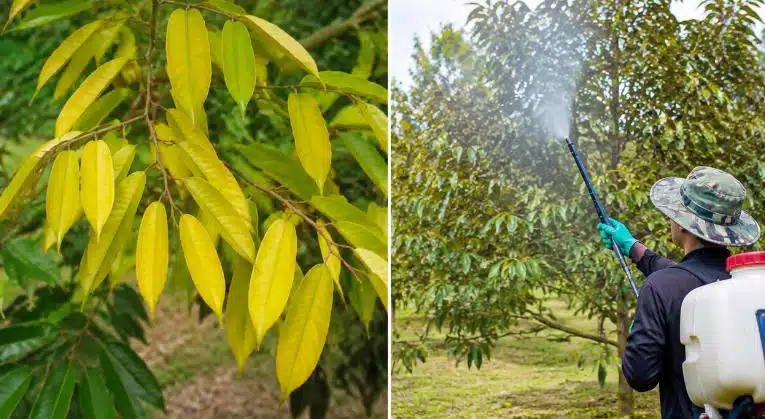
Common Nutrient Deficiencies in Durian
Understanding which nutrients are lacking is essential to applying the right corrective measures. The most frequent deficiencies include:
1. Nitrogen (N) Deficiency
Nitrogen is crucial for vegetative growth. A deficiency leads to:
- Pale green or yellow older leaves
- Reduced shoot and leaf growth
- Weak flowering and fruit set
Correction: Apply nitrogen-rich fertilizers such as urea or ammonium sulfate in split applications during active growth stages.
2. Phosphorus (P) Deficiency
Phosphorus supports root development, flowering, and fruit maturation. Symptoms include:
- Dark green leaves with purplish edges
- Stunted root and shoot growth
- Delayed flowering
Correction: Use phosphate fertilizers like rock phosphate or superphosphate, ideally in the root zone for better uptake.
3. Potassium (K) Deficiency
Potassium is essential for fruit quality, sugar accumulation, and disease resistance. Signs of deficiency:
- Yellowing at leaf edges, brown scorching
- Poor fruit development
- Increased susceptibility to pests and diseases
Correction: Apply potassium sulfate or muriate of potash during fruiting stages for optimal fruit quality.
4. Zinc (Zn) Deficiency
Zinc is vital for enzyme activation and growth regulation. Symptoms include:
- Small, distorted leaves
- Interveinal yellowing on young leaves
- Weak shoot growth
Correction: Foliar sprays of zinc sulfate or soil application of zinc oxide can restore levels effectively.
5. Boron (B) Deficiency
Boron is crucial for flower formation and fruit set. Deficiency signs:
- Poor flowering or fruit drop
- Thickened or brittle young leaves
- Hollow stems in severe cases
Correction: Foliar boron sprays or borax soil applications at early flowering stages can correct deficiencies.
6. Magnesium (Mg) Deficiency
Magnesium is a core component of chlorophyll. Its deficiency presents as:
- Yellowing between leaf veins (interveinal chlorosis)
- Leaf drop, especially older leaves
- Reduced photosynthesis and vigor
Correction: Apply magnesium sulfate or dolomite lime to improve magnesium content in the soil.
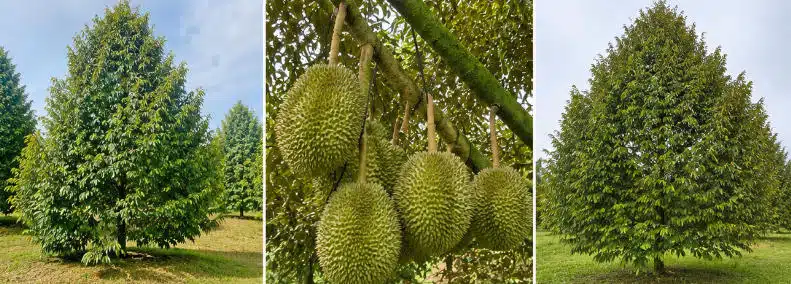
How to Diagnose Nutrient Problems Accurately
Accurate diagnosis prevents over- or under-fertilization. Follow these steps:
- Visual Inspection: Observe leaf color, shape, and growth patterns.
- Soil Testing: Identify nutrient imbalances and pH levels.
- Leaf Analysis: Determines actual nutrient content within the plant tissues.
- Growth Monitoring: Track tree performance over time to detect subtle deficiencies early.
Corrective Fertilization Strategies
Once a deficiency is identified, a combination of soil and foliar fertilization often works best:
- Soil application: Supplies macronutrients like N, P, K gradually.
- Foliar application: Quickly corrects micronutrient deficiencies such as Zn and B.
- Split dosing: Avoids nutrient leaching and ensures steady uptake.
- Balanced fertilizer programs: Maintain the correct N:P:K ratios tailored to the tree’s growth stage.
Recommended MASL Products for Deficiency Correction
MASL Biotech offers specialized fertilizers designed for durian nutrient management:
- MASL Durian NPK Formula: Balanced NPK for overall growth and fruiting.
- MASL Micronutrient Mix: Targets Zn, B, and Mg deficiencies.
- MASL Foliar Sprays: Rapid correction of early leaf yellowing and growth problems.
These products ensure targeted nutrient delivery, improving tree health and maximizing yield.
Monitoring and Follow-Up
Corrective fertilization is not a one-time solution. Regular monitoring is critical:
- Reassess leaf color and growth patterns monthly.
- Conduct soil and leaf tests each season.
- Adjust fertilizer programs based on tree response and environmental factors.
Conclusion: Keep Durian Trees Healthy
Proactive nutrient management ensures durian trees remain vigorous and productive. By identifying nutrient deficiencies early and applying the right MASL fertilizers, growers can prevent yellow leaves, boost growth, and achieve higher yields. Healthy trees mean better fruit quality and more profitable harvests.


