
Why traditional fertilization often fails field crops
Farmers growing field crops such as wheat, corn, rice, and soybeans often face persistent problems even after heavy fertilizer use: weak root systems, lodging, drought-induced leaf curling, and poorly filled grains.
The core problem? Many chemical fertilizers only supply nitrogen (N), phosphorus (P), and potassium (K), while neglecting other essential factors that crops need for strong growth, stress resistance, root development, and healthy grain production.
What makes concentrated seaweed extract different
Derived from deep-sea brown algae
Genuine concentrated seaweed extract is produced from deep-sea brown algae (such as kelp or other marine brown algae species).
Contains three “golden components” absent in ordinary fertilizers
- Seaweed polysaccharides + mannitol: These compounds form a protective layer around crop roots, helping to retain soil moisture and stimulating the development of fine roots. This supports stable water and nutrient uptake, even under drought or flooding conditions.
- Natural growth hormones (cytokinins + gibberellins): Unlike synthetic chemical hormones, these natural hormones encourage tillering in wheat, jointing in corn, and heading in rice — promoting strong stems and leaves without excessive vegetative growth, thereby boosting lodging resistance.
- Chelated micronutrients (calcium, magnesium, zinc, boron): Many field crops suffer from micronutrient deficiencies (e.g., magnesium deficiency causes leaf yellowing; boron shortage can lead to poor ear formation in wheat or tip barrenness in corn). The chelated minerals in seaweed extract are absorbed quickly and precisely, eliminating the need for additional micronutrient fertilizers.
Water-soluble and soil-friendly application
As an organic, water-soluble fertilizer, seaweed extract can be applied through fertigation or foliar spraying. It penetrates quickly, avoids soil compaction, and — in fields with long-term chemical fertilizer use — can help loosen the soil and encourage deeper root growth.
Key benefits for field crops
Stronger root systems and improved early growth
- Wheat: When applied as seed dressing or post-sowing, seedlings emerge more uniformly and vigorously. During the greening stage, treated plants develop 2–3 extra layers of capillary roots compared to untreated crops — helping prevent root rot and seedling death even in cold early-spring conditions.
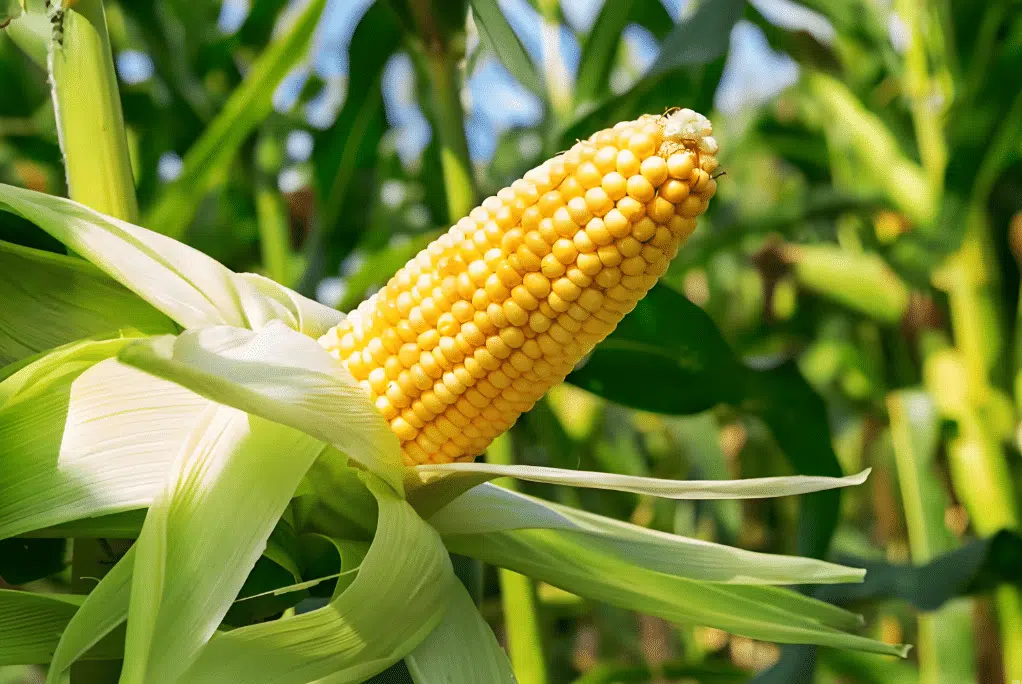
- Corn: Seedling spraying results in roots reaching over 50 cm deep (vs. ~30 cm for untreated), reducing lodging risk during storms and increasing drought resistance.
- Rice: After transplanting, root irrigation accelerates seedling establishment (by 3–5 days) and improves tiller development — leading to an 8–10% increase in ear number.
Healthier foliage and better grain development
- Treated wheat and corn maintain dark green leaves for over 20 days when sprayed at key growth stages (jointing or tasseling), which boosts photosynthesis and increases dry matter accumulation.
- For rice and soybeans: applying seaweed extract during grain filling or pod-setting accelerates grain filling and reduces empty grains by over 15%. For corn, foliar spray after silking reduces tip barrenness and increases ear weight by 10–12%, producing fuller, brighter grains.
Enhanced stress resistance and yield stability
- Under drought or water stress, treated crops show a 60% lower rate of leaf curling than untreated ones.
- Corn plants under stress reach tasseling only 2 days later than normal (versus 5–7 days delay for untreated plants), with no negative impact on grain filling — yielding about 3% more per acre in tough years.
- After flooding, treated fields recover more quickly: root vitality returns faster, reducing root rot, with the crops resuming healthy growth about 7 days earlier than untreated fields.
Why concentrated seaweed extract helps achieve sustainable, high-yield agriculture
Using concentrated seaweed extract addresses multiple shortcomings of conventional fertilizers at once — strong roots, micronutrient balance, natural growth regulation, and soil health — making it an ideal choice for farmers seeking higher yield, improved crop quality, and better resilience against environmental stress.
Because it is organic and water-soluble, it integrates well into modern fertigation or foliar-spray systems and avoids soil compaction, even in fields that have been heavily used with chemical fertilizers.
Conclusion: A holistic fertilization strategy to boost yields
If you’re growing wheat, corn, rice, soybeans or other field crops, relying solely on standard chemical fertilizers may leave critical gaps in root development, micronutrient supply, stress resistance, and yield potential.
Integrating genuine concentrated seaweed extract into your fertilization plan — applied via seed dressing, foliar spray, or fertigation at strategic stages — can significantly strengthen roots, improve plant health, help crops withstand stress, and ultimately increase yield and grain quality.


