
Growing vegetables successfully requires more than just sunlight and water. One of the most important factors for healthy plant growth and high yields is choosing the best vegetable fertilizer. Whether you manage a small backyard plot or operate a large commercial farm, the right fertilizer can significantly improve soil fertility, crop quality, and productivity.
For growers working with multiple crops, especially in commercial production systems, using the correct vegetable fertilizer for market gardens or a balanced fertilizer for mixed vegetables is essential. Each vegetable has unique nutritional needs, and a well-designed fertilizer program ensures plants receive the nutrients required at every growth stage.
In this guide, we’ll explore how to choose the best fertilizer for vegetables, the importance of balanced nutrients, and how professional solutions from MASL can help growers achieve better results.
Why Vegetables Need the Right Fertilizer
Vegetables are heavy feeders compared to many other crops. Continuous cultivation quickly depletes soil nutrients, especially in intensive production systems such as greenhouses or market gardens.
Using a high-quality vegetable fertilizer helps:
- Improve plant growth and root development
- Increase yields and crop uniformity
- Enhance flavor, color, and nutritional value
- Strengthen plant resistance to stress and disease
- Restore soil fertility in intensively cultivated land
Without proper fertilization, vegetables may suffer from slow growth, poor fruit development, or nutrient deficiencies.
Understanding Nutrient Requirements for Vegetables
Vegetables require three primary nutrients: nitrogen (N), phosphorus (P), and potassium (K). A balanced fertilizer for multiple vegetables contains these elements in suitable proportions to support plant growth throughout the growing season.
Nitrogen (N)
Nitrogen promotes leafy growth and is essential for vegetables like lettuce, spinach, cabbage, and other leafy greens.
Phosphorus (P)
Phosphorus supports root development, flowering, and early plant establishment. It is particularly important for crops like tomatoes, peppers, and cucumbers.
Potassium (K)
Potassium improves fruit quality, disease resistance, and overall plant health.
In addition to these macronutrients, vegetables also require secondary and micronutrients such as calcium, magnesium, boron, and zinc for optimal growth.
Best Vegetable Fertilizer for Market Gardens
Market gardens grow multiple vegetable crops simultaneously, often on limited land. This means the soil must provide consistent nutrients across many plant varieties.
The ideal vegetable fertilizer for market gardens should:
- Provide balanced NPK nutrition
- Improve soil microbial activity
- Support both leafy and fruiting vegetables
- Maintain soil structure and fertility
- Deliver nutrients efficiently throughout the season
Many professional growers prefer water-soluble or specialty fertilizers because they allow precise nutrient management and quick absorption by plant roots.
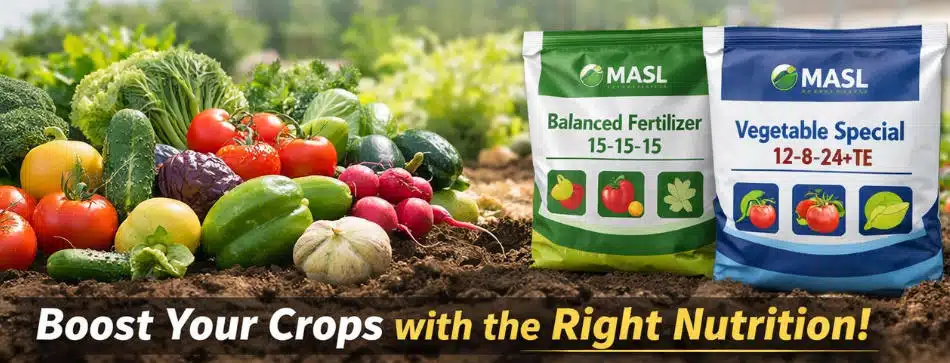
At MASL, we specialize in advanced agricultural inputs designed to support high-efficiency vegetable production. Our fertilizer solutions are formulated to help growers maintain productivity while improving crop quality.
Choosing a Balanced Fertilizer for Mixed Vegetables
When planting different vegetable varieties together, nutrient requirements may vary. A balanced fertilizer for multiple vegetables ensures that each crop receives adequate nutrition without causing nutrient imbalances.
Key characteristics of a good multiple-vegetable fertilizer include:
- Balanced NPK ratios
- Fast nutrient availability
- Compatibility with drip irrigation or foliar feeding
- Improved nutrient uptake efficiency
Balanced fertilizers are particularly useful in:
- Home vegetable gardens
- Market garden production systems
- Greenhouse vegetable cultivation
- Small diversified farms
Using the right nutrient balance allows growers to support leafy vegetables, root crops, and fruiting vegetables at the same time.
Fertilizer Types for Vegetable Production
There are several types of fertilizers commonly used in vegetable farming.
1. Organic Vegetable Fertilizers
Organic fertilizers improve soil structure and microbial activity. They release nutrients slowly and help maintain long-term soil health.
Common organic fertilizers include:
- Compost
- Manure
- Fish emulsion
- Plant-based organic fertilizers
Organic options are often used in sustainable and ecological farming systems.
2. Water-Soluble Fertilizers
Water-soluble fertilizers are widely used in modern vegetable production. They dissolve quickly and allow plants to absorb nutrients efficiently.
Benefits include:
- Fast nutrient uptake
- Precise dosage control
- Compatibility with irrigation systems
These fertilizers are commonly used for greenhouse vegetable fertilization and commercial farming.
3. Specialty Crop Fertilizers
Specialty fertilizers are designed for specific crop stages, such as root development, flowering, or fruit expansion.
Professional agricultural companies like MASL develop specialty fertilizers tailored for vegetable crops, helping farmers optimize growth during critical stages.
Best Fertilization Practices for Vegetable Gardens
Applying fertilizer correctly is just as important as choosing the right product.
Test Your Soil First
A soil test reveals nutrient deficiencies and helps determine the correct fertilizer type and application rate.
Apply Fertilizer at the Right Time
Different growth stages require different nutrients:
- Early growth: nitrogen and phosphorus
- Flowering stage: phosphorus and potassium
- Fruit development: potassium and micronutrients
Use Split Applications
Applying fertilizer in several smaller doses throughout the season improves nutrient efficiency and reduces waste.
Combine Soil and Foliar Feeding
Foliar fertilizers provide quick nutrient absorption during critical growth stages.
Sustainable Fertilization for Modern Agriculture
Today’s growers are increasingly focused on sustainability. Efficient fertilization strategies help reduce environmental impact while improving crop yields.
Modern fertilizer technology aims to:
- Improve nutrient use efficiency
- Reduce fertilizer runoff
- Support soil health and microbial activity
- Increase crop productivity with lower inputs
Companies like MASL Biotech are committed to developing advanced agricultural solutions that support sustainable vegetable farming.
By combining scientific research with practical field experience, MASL provides fertilizer products designed to meet the needs of both commercial growers and market gardeners.
Why Choose MASL Fertilizers for Vegetables
When selecting the best vegetable fertilizer, quality and reliability are essential.
MASL offers several advantages for growers:
Advanced Formulations
Our fertilizers are developed using modern agricultural technology to provide balanced and efficient nutrient delivery.
Suitable for Multiple Vegetable Crops
MASL fertilizers work effectively for tomatoes, cucumbers, peppers, leafy greens, root vegetables, and many other crops.
Improved Crop Quality
Our products help enhance vegetable size, flavor, color, and overall yield.
Professional Agricultural Support
MASL provides growers with technical guidance to optimize fertilizer programs for different farming conditions.
If you are looking for a reliable partner in agricultural nutrition, MASL Biotech offers innovative solutions designed for modern vegetable production.
Learn more at: https://maslbiotech.com/product-category/vegetable-fruit-crop/
Choosing the best vegetable fertilizer plays a critical role in achieving healthy plants and high yields. For growers cultivating diverse crops, using a vegetable fertilizer for market gardens or a balanced fertilizer for mixed vegetables ensures consistent nutrition across different vegetable varieties.
By understanding plant nutrient requirements, selecting the right fertilizer type, and applying nutrients at the proper growth stages, farmers can significantly improve productivity and crop quality.
With advanced fertilizer solutions and professional agricultural expertise, MASL Biotech helps growers around the world achieve more efficient and sustainable vegetable production.
