
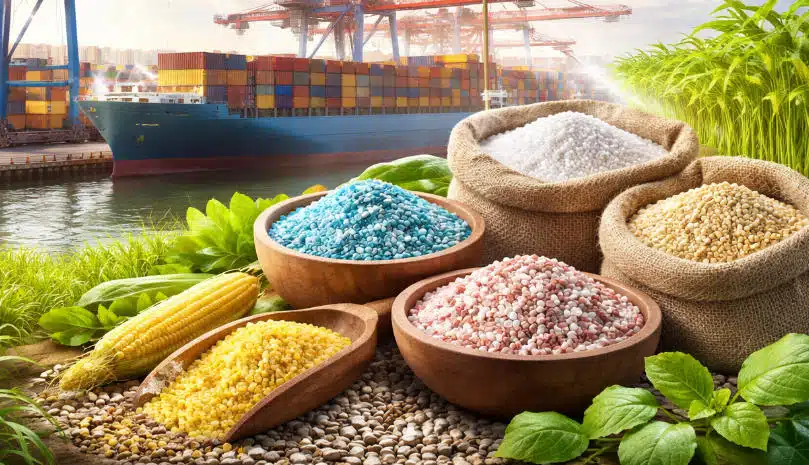
China plays a pivotal role in the global fertilizer market, both as a major producer and a significant exporter of industrial fertilizers. Fertilizers—especially nitrogen, phosphate, and compound blends—are essential components in modern agriculture, supporting food production worldwide. Over recent years, China’s fertilizer exports have demonstrated resilience amid shifting global demand, supply chain adjustments, and evolving trade policies.
Export Trends and Market Profile
According to recent customs data, China’s fertilizer exports have remained strong through 2025, with cumulative shipments of various fertilizer categories increasing year-on-year. Between January and October 2025, China exported around 38.4 million tonnes of fertilizer products, valued at about $115.5 billion, representing significant growth compared with prior periods. Key export products included urea, ammonium sulfate, and various phosphate fertilizers. Fert
Detailed trade statistics from 2025 also show that nitrogen-phosphate compound fertilizers and ammonium sulfate have been among the most exported fertilizer types by volume. Over the first half of 2025 alone, total fertilizer exports reached 17.13 million tonnes, a 35.9 % increase compared with the previous year, with ammonium sulfate leading in volume.
These figures illustrate not only production scale but also the importance of global agricultural demand for China’s fertilizer output. Chinese provinces with fertilizer production bases—such as Shandong, Henan, and Hubei—connect to export markets across Asia, Africa, Latin America, and beyond.
Major Chinese Fertilizer Producers
China’s fertilizer industry includes a mix of state-owned giants, public chemical conglomerates, and specialized fertilizer manufacturers. Some of the most influential players with significant production capacity or export footprints include:
Sinochem Group & Sinofert
- Sinochem Group is one of the country’s largest chemical and fertilizer conglomerates, with operations spanning production, international trade, and distribution. Through its subsidiary Sinofert, it controls a broad range of fertilizer production assets and contributes substantially to China’s export volumes. 维基百科
Qingdao Green Chemicals Co., Ltd.
- Identified as a leading exporter based on shipment data, Qingdao Green Chemicals has been active in international fertilizer trade, accounting for a sizeable share of outbound shipments from China.
Shandong & Hubei Chemical Exporters
- Companies such as Shandong Gross Import and Export Co., Ltd. and Hubei Zhouxiang Chemical Co. have also been highlighted among top fertilizer exporting entities, based on shipment volumes in recent export tracking platforms.
Yihua Group and XLX Group
- Hubei Yihua Group and Xinlianxin Chemical Industry Group (XLX Group) are among large domestic fertilizer producers with notable output capacities and established positions in fertilizer manufacturing. Their products range from nitrogen fertilizers to phosphate-based blends.
MASL Biotechnology (Shenyang MASL Biotechnology Co., Ltd.)
The company’s product portfolio spans field crop, orchard, root/tuber, and vegetable/fruit crop fertilizers, emphasizing sustainable agriculture and tailored crop nutrition.
MASL Biotechnology represents a different strand of China’s fertilizer industry, integrating R&D, production, and global distribution of fertilizer raw materials and formulated products across multiple crop categories. According to its corporate profile, MASL focuses on high-quality fertilizer inputs and plant nutrition solutions, with products exported to markets on five continents and meeting international standards such as EU REACH certification.
Global Export Destinations and Drivers
China’s fertilizer exports serve diverse markets with varying agricultural needs. Countries in South and Southeast Asia, Africa, and Latin America frequently import Chinese fertilizers to supplement domestic production and meet crop nutrient demands. Factors influencing export flows include crop planting cycles, international commodity prices, and shifting trade policy landscapes.
China’s fertilizer exporters are increasingly focusing on product quality, compliance with international standards, and responsive customer service to remain competitive in global markets. Firms like MASL Biotechnology highlight this trend by emphasizing innovation, crop-specific formulations, and sustainable practices suitable for a range of agronomic environments.
Sustainability, Technology, and Future Directions
While traditional chemical fertilizers continue to dominate Chinese fertilizer exports, there is growing interest in sustainable and high-efficiency solutions. Advances in nutrient-enhancing formulations, biofertilizers, and precision nutrient products are gaining traction among global agricultural stakeholders seeking improved nutrient use efficiency and reduced environmental impact.
Companies operating in this evolving landscape—including MASL and other forward-looking manufacturers—are investing in research and collaboration to refine fertilizer technologies that balance productivity with environmental stewardship.
Challenges and Outlook
Despite strong production capabilities, Chinese fertilizer exporters face challenges such as fluctuating raw material costs, environmental regulatory pressures, and competitive dynamics from other global producers. Nevertheless, investments in technology, quality compliance, and tailored solutions are poised to sustain China’s role as a key supplier in the global fertilizer market.


