
Cotton is not a crop that performs well with delay. In the early season, it is naturally a weak competitor, and slow establishment can affect the whole crop cycle. That is why early nutrition matters so much: the plant must build roots, expand leaves, and prepare for later reproductive growth before stress starts to accumulate. Good early management helps cotton move through this vulnerable stage with more stability and better yield potential later.
A strong cotton early stage fertilizer is not only about feeding the plant. It is about building the foundation for root activity, nutrient uptake, leaf function, and stress tolerance. The MASL Cotton Early Stage Specialty Fertilizer is formulated with free amino acids, magnesium, zinc, manganese, and glutathione, which are designed to support early vegetative growth, root establishment, and better resistance to environmental stress.
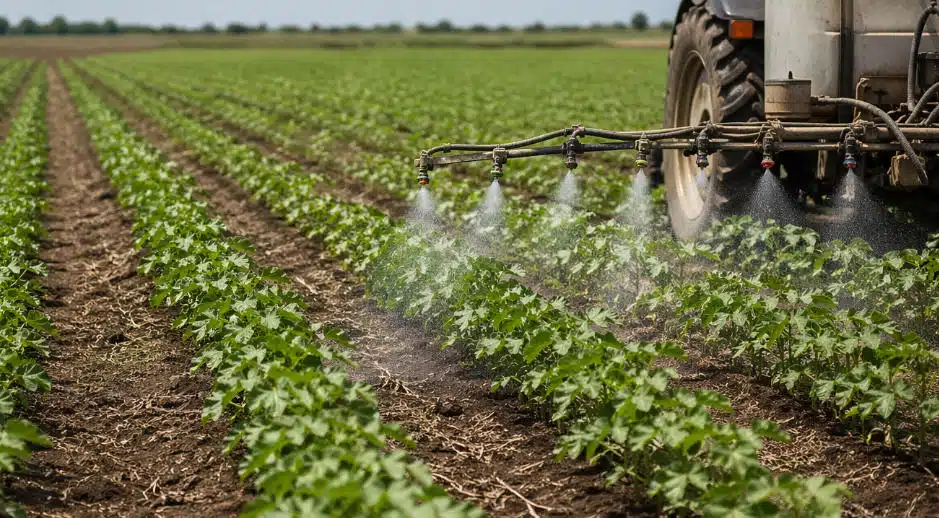
Why Early Stage Cotton Nutrition Matters
Early cotton growth sets the tone for the rest of the season. When the crop starts slowly, the plant can become more sensitive to weather stress, nutrient shortage, and other field pressures. Cotton is especially vulnerable during the early vegetative period, and a timely nutrition strategy can help it recover faster and maintain more stable growth.
At this stage, the plant is building root capacity and leaf area. That means nutrient supply must support not just growth, but also internal processes such as chlorophyll formation, enzyme activity, and cell structure development. In practical terms, early stage nutrition is about helping the plant become stronger before the higher-demand growth phases begin.
What a Cotton Early Stage Fertilizer Should Do
A good early stage cotton fertilizer should do four things:
It should support root establishment so the plant can absorb more water and minerals.
It should promote healthy vegetative growth so the crop can build canopy efficiently.
It should improve chlorophyll and photosynthesis so the plant can produce energy steadily.
It should strengthen stress resistance so cotton handles drought, cold, and transplant-like setbacks better.
MASL’s product is built around free amino acids, magnesium, zinc, manganese, and glutathione. According to the product page, this combination is positioned to enhance root proliferation, support chlorophyll synthesis, and improve stress tolerance during the early-to-mid cotton growth stage.
Key Nutrients for Early Cotton Growth
Free amino acids
Free amino acids are often used in specialty nutrition because they support metabolic activity and recovery during stress. In the product formulation, amino acids are the core carrier, helping the plant move into a stronger growth state.
Magnesium
Magnesium is essential for chlorophyll function and overall photosynthetic performance. Cotton guidance also shows that magnesium deficiency is one of the nutrient issues that tissue testing can help detect.
Zinc
Zinc is especially important for growth processes in cotton, and the Cotton Council notes that micronutrient availability is affected by soil pH. As pH rises, zinc availability decreases, which makes targeted nutrition more important in some fields.
Manganese
Manganese supports enzymatic activity and photosynthetic function. It is also among the micronutrients that can be identified through tissue testing during vegetative growth.
Glutathione
Glutathione is included in the MASL product to help with oxidative stress protection and to support plant stability under unfavorable conditions.
How to Use Cotton Early Stage Fertilizer
According to the MASL product page, the recommended foliar spray dilution is 800–1000 times, applied every 7–10 days for 2–3 consecutive applications. For fertigation or drip irrigation, the recommended rate is 15–30 L per hectare. The product page also advises avoiding strong acidic or alkaline tank mixes and doing a compatibility test before mixing with other products. If rain occurs within 4 hours after spraying, reapplication at a reduced rate may be needed.
That application strategy makes sense for early cotton because foliar feeding can be used as a fast correction tool while soil and tissue programs continue in the background. In cotton guidance, tissue testing is especially useful for correcting nutritional problems before bloom and for identifying magnesium, sulfur, manganese, and zinc issues during vegetative growth.
What Problems It May Help Reduce
A well-designed early cotton nutrition program may help reduce:
- slow early establishment
- weak root growth
- pale or yellowing leaves
- stunting
- low chlorophyll activity
- poor stress recovery
- weaker plant structure before reproductive growth
These are exactly the kinds of problems that matter when cotton is still building its foundation. Early-season management is important because the crop is vulnerable and slower to compete during this stage.

Best Practices for a 2026 Cotton Nutrition Program
In 2026, the strongest cotton nutrition content and product positioning should not sound generic. It should be practical, stage-based, and problem-solving. The best approach is to connect your fertilizer message to real agronomy:
Start with soil testing and use tissue testing early enough to catch hidden deficiencies.
Pay special attention to Mg, Zn, and Mn because they are relevant to early vegetative correction.
Keep soil pH in a range that supports micronutrient availability, because zinc and manganese become less available as pH rises.
Use foliar nutrition as a support tool, not as a substitute for basic fertility planning.
