
Introduction: Importance of NPK for Durian Fruit
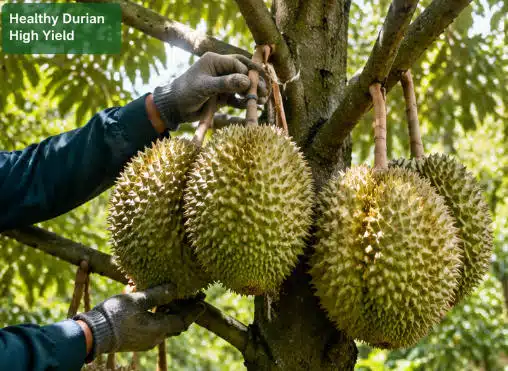
Durian trees are notorious for their demanding nutrient requirements, especially when aiming for high-quality fruits. The balance of nitrogen (N), phosphorus (P), and potassium (K) – collectively known as NPK – is essential for both vegetative growth and fruit development.
- Nitrogen (N) promotes leafy growth and overall vigor.
- Phosphorus (P) supports root development and flower formation.
- Potassium (K) is crucial for fruit size, sweetness, and resilience against stress.
Improper NPK management can result in smaller fruits, poor taste, or reduced yield, making balanced fertilization a cornerstone of durian orchard success.
Recommended NPK Ratios for Different Stages
Durian trees require different nutrient ratios depending on their growth stage:
- Vegetative Stage (Young Trees)
- N:P:K ratio: 3:1:2
- Focus: Promote strong root systems and leafy growth.
- Application: Regular soil fertilization combined with light foliar sprays.
- Flowering Stage
- N:P:K ratio: 1:2:2
- Focus: Encourage flower formation and reduce flower drop.
- Tip: Moderate nitrogen; excessive N at this stage may reduce flowering.
- Fruit Development Stage
- N:P:K ratio: 1:1:2 to 1:1:3
- Focus: Maximize fruit size, weight, and sugar content.
- Application: Split doses using both soil and foliar feeding for best results.
Balancing these ratios ensures the tree receives the right nutrients at the right time, preventing nutrient imbalances that can affect fruit quality.
Application Methods: Soil vs Foliar
Soil Application:
- Best for long-term nutrient supply.
- Fertilizer can be applied in rings around the tree base.
- Incorporate slow-release fertilizers to maintain a steady nutrient supply.
Foliar Application:
- Ideal for correcting nutrient deficiencies quickly.
- Enhances flowering and fruit setting.
- Spray during cooler parts of the day to prevent leaf burn.
Using a combination of both methods ensures durian trees receive sufficient nutrients throughout their growth cycle.
Common Mistakes and How to Avoid Them
- Over-fertilizing with Nitrogen:
- Can lead to excessive vegetative growth and reduced flowering.
- Ignoring Potassium Needs:
- Low K results in smaller, less sweet fruits.
- Uniform Fertilization Without Stage Consideration:
- Trees require different nutrient ratios at different stages; one-size-fits-all fertilization reduces fruit quality.
- Neglecting Soil Testing:
- Regular soil tests help tailor NPK application to the orchard’s needs, avoiding waste and imbalances.
MASL Biotech NPK Fertilizer Solutions
MASL Biotech offers a range of NPK fertilizers specifically formulated for durian:
- Early Stage Formula: High nitrogen content for young tree growth.
- Flowering & Fruit Setting Formula: Balanced NPK to promote flower retention and fruit initiation.
- Fruit Development Formula: Higher potassium content to maximize size, sweetness, and yield.
Each product is designed for precision application, ensuring that durian trees achieve their maximum potential while minimizing nutrient waste.
Expected Results: Fruit Size, Sweetness, and Yield
When NPK is correctly balanced:
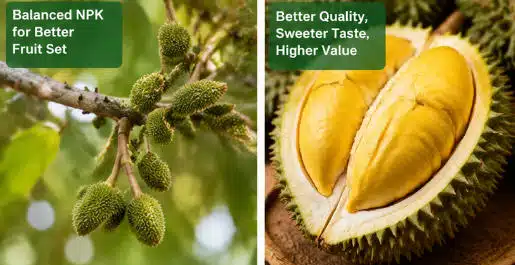
- Fruit Size: Larger, heavier durians with uniform shape.
- Sweetness & Flavor: Enhanced sugar content and characteristic aroma.
- Yield: Increased fruit number per tree and better overall orchard productivity.
Farmers who follow stage-specific NPK fertilization report consistent quality improvements, stronger trees, and higher economic returns.
Conclusion: Achieving Balanced Nutrition
Balanced NPK fertilization is key to producing high-quality durian fruits. By understanding the specific nutrient needs at each growth stage, using a combination of soil and foliar applications, and leveraging specialized fertilizers like those from MASL Biotech, durian growers can enhance fruit size, sweetness, and overall yield.
Investing in proper NPK management is not just about healthier trees – it’s about maximizing the orchard’s profitability and delivering premium-quality durians to the market.
