
In cereal production, timing often matters more than total input. Many growers focus heavily on pre-plant fertilizer programs, but experienced farmers know that Topdressing is where yield potential is either secured—or lost.
Whether you grow wheat, corn, rice, or barley, understanding topdressing fertilizer rates for cereal crops can significantly improve nitrogen use efficiency, grain quality, and overall return on investment. The goal is not to apply more fertilizer, but to apply the right rate at the right growth stage.
At MASL, we work closely with commercial grain producers to design balanced nutrient programs that align with soil conditions, yield targets, and sustainable agriculture practices. (You can internally link here to your Agricultural Fertilizers or Crop Nutrition Solutions page on maslbiotech.com.)
Why Topdressing Matters More Than Many Farmers Realize
Cereal crops have dynamic nitrogen demand curves. Early growth requires support for root establishment, but the real nitrogen surge happens during vegetative expansion and early reproductive development.
This is why searches like:
- best nitrogen topdressing rate for wheat
- side-dress nitrogen rate for corn
- when to apply nitrogen topdressing
- how to increase grain protein in wheat
are increasingly common among commercial growers.
Topdressing ensures nitrogen is available when crops can actually absorb and convert it efficiently. Without it, even well-fertilized fields may fall short of their yield potential.
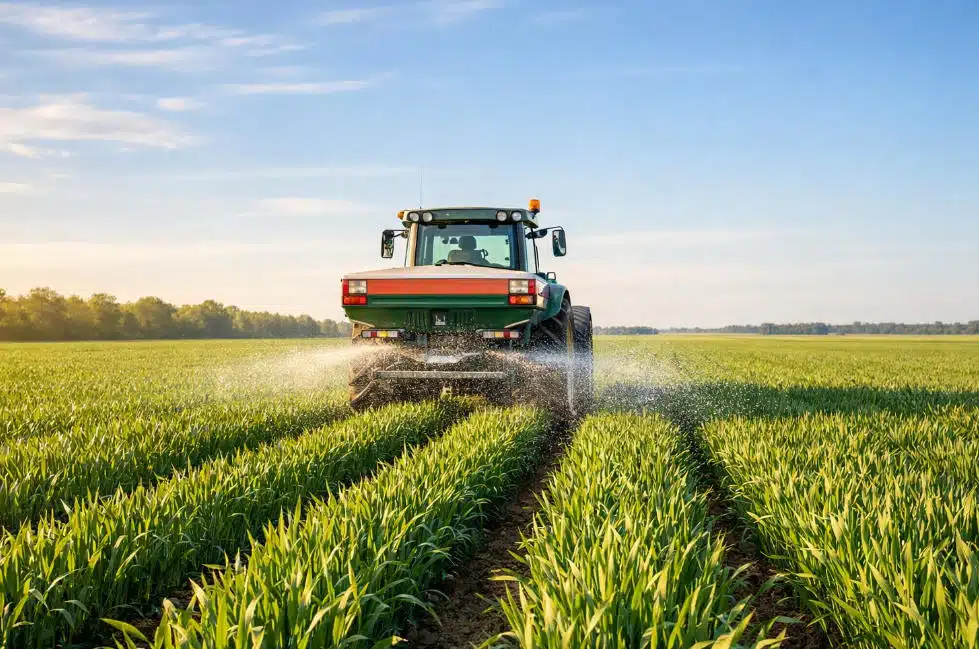
Recommended Topdressing Fertilizer Rates for Major Cereal Crops
These guidelines are practical field references. Actual rates should always be adjusted using soil testing and local agronomic data.
1. Wheat (Winter & Spring)
Wheat responds strongly to split nitrogen application.
Total nitrogen requirement:
120–220 kg N/ha (depending on yield target)
Topdressing portion:
40–60% of total nitrogen
Application timing:
- Tillering stage
- Stem elongation stage
Typical topdressing rate:
50–120 kg N/ha per application
For growers aiming to improve grain protein content, late-season nitrogen topdressing may also be considered, especially in high-yield environments.
Using a stabilized nitrogen source from MASL’s specialty fertilizer portfolio (internal link suggestion: Specialty Fertilizers page) can significantly improve nitrogen use efficiency in wheat production systems.
2. Corn (Maize)
Corn has one of the highest nitrogen demands among cereal crops.
Total nitrogen requirement:
150–300 kg N/ha
Best timing for side-dress nitrogen application:
V6–V8 growth stage
Recommended topdressing rate:
80–180 kg N/ha
Applying nitrogen just before rapid vegetative growth improves nutrient uptake and reduces losses. Farmers searching for how to calculate nitrogen rate for high-yield corn should always consider soil nitrate levels and organic matter mineralization.
Precision application tools combined with high-efficiency nitrogen fertilizers can improve nitrogen use efficiency in cereal crops by 15–30%.
3. Rice (Paddy Systems)
Nitrogen loss in flooded conditions makes rice management more complex.
Total nitrogen requirement:
100–180 kg N/ha
Topdressing stages:
- Active tillering
- Panicle initiation
Rate per application:
30–60 kg N/ha
Controlled-release fertilizers or urease inhibitor-treated nitrogen can significantly reduce volatilization losses. MASL provides advanced nutrient formulations designed for improved nitrogen retention (internal link suggestion: Crop-Specific Fertilizer Solutions page).
4. Barley and Oats
For feed barley:
Total nitrogen requirement:
80–160 kg N/ha
Topdressing rate:
30–80 kg N/ha
However, for malting barley, excessive nitrogen increases protein content beyond acceptable industry standards. In these cases, moderate topdressing fertilizer rates are critical.
How to Calculate the Right Topdressing Rate
Modern growers increasingly search for soil test based nitrogen recommendation for cereal crops. That is the correct starting point.
Step 1: Conduct Soil Testing
Measure available nitrate nitrogen before planning your topdressing fertilizer application.
Step 2: Define Yield Target
Higher yield goals require higher nitrogen rates—but only if water availability and growing conditions support it.
Step 3: Adjust for Weather Conditions
Heavy rainfall increases leaching risk. Drought reduces nutrient uptake. Adjust rates accordingly.
Step 4: Consider Nitrogen Source
Urea, UAN solution, ammonium nitrate, and enhanced-efficiency fertilizers all behave differently in soil systems.
Working with an experienced fertilizer supplier like MASL helps optimize fertilizer programs based on regional agronomic data (internal link suggestion: About MASL page).
Improving Nitrogen Use Efficiency (NUE) in Cereal Crops
Maximizing yield while minimizing environmental impact is now central to modern agriculture.
Strategies include:
- Split nitrogen applications
- Stabilized nitrogen fertilizers
- Precision spreading technology
- Balanced phosphorus and potassium supply
- Foliar nutrient supplementation when needed
Farmers searching for how to improve nitrogen use efficiency in wheat and corn are often looking to reduce fertilizer waste while maintaining high productivity.
Proper Topdressing management supports:
- Stronger tiller development
- Improved grain filling
- Higher protein content
- Reduced nitrogen runoff
- Lower production cost per ton
Common Topdressing Mistakes
Even experienced growers sometimes:
- Apply excessive nitrogen too late
- Ignore soil residual nitrogen
- Use inappropriate fertilizer forms in flooded systems
- Apply before heavy rainfall
- Overestimate yield potential
Balanced nutrient management always outperforms excessive fertilization.
Sustainable and Profitable Cereal Nutrition
The future of cereal crop production depends on precision, efficiency, and sustainability. Well-managed Topdressing supports:
- Higher yield stability
- Better grain quality
- Improved return on fertilizer investment
- Reduced environmental footprint
At MASL, we focus on providing scientifically formulated agricultural fertilizers that align with modern cereal nutrient management systems. By combining agronomic expertise with advanced fertilizer technology, we help growers build profitable and sustainable production systems.
Topdressing fertilizer rates for cereal crops should never be based on guesswork. They should reflect soil fertility, crop growth stage, yield target, and environmental conditions.
When nitrogen is applied strategically—through properly calculated Topdressing—it becomes one of the most powerful tools for maximizing cereal crop performance.
The difference between average yield and exceptional yield often comes down to precision nutrient timing.
