
Introduction: Importance of Seasonal Fertilization
Durian trees are a high-value tropical crop that require precise nutrient management throughout the year. Unlike annual crops, durian has multiple growth stages that demand varying nutrient inputs. Seasonal fertilization ensures that trees receive the right balance of nitrogen (N), phosphorus (P), potassium (K), and essential micronutrients at each stage of growth. Proper nutrient management not only supports vigorous vegetative growth but also enhances flowering, fruit set, and fruit quality, ultimately maximizing yield and profitability.
Implementing a well-planned durian fertilizer calendar helps farmers prevent nutrient deficiencies, reduce fertilizer wastage, and maintain long-term soil health. MASL Biotech offers a range of specialized fertilizers tailored to meet the unique demands of durian orchards during different seasons.
Fertilization Schedule for Each Growth Stage
Durian trees have four critical growth stages: vegetative growth, flowering, fruit development, and post-harvest recovery. Each stage requires a targeted nutrient strategy.
1. Vegetative Growth (January – March)
During this period, durian trees focus on leaf and branch development. High nitrogen fertilizers are essential to promote lush green growth.
Nutrient Recommendations:
- Nitrogen-rich fertilizers (e.g., MASL Biotech NPK 15:5:20 with added micronutrients)
- Trace elements such as magnesium and zinc to support chlorophyll formation
Application Tips:
- Apply fertilizer evenly around the drip line of the canopy
- Split applications into 2–3 doses for efficient uptake
2. Flowering Stage (April – June)
Flowering requires a balanced supply of nutrients, with slightly higher phosphorus to encourage flower bud initiation and potassium for flower and fruit development.
Nutrient Recommendations:
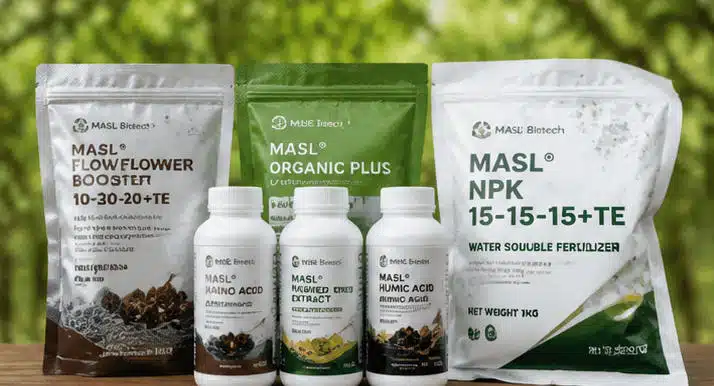
- MASL Biotech Flowering Booster (high P & K, moderate N)
- Foliar sprays with micronutrients such as boron and calcium to prevent flower drop
Application Tips:
- Foliar application in early morning or late afternoon for better absorption
- Avoid excessive nitrogen at this stage to prevent vegetative growth at the expense of flowers
3. Fruit Development (July – September)
This is the most nutrient-demanding stage. Potassium is critical for fruit size, taste, and shelf life. Nitrogen should be moderate to maintain growth without excessive vegetative vigor.
Nutrient Recommendations:
- MASL Biotech 2K Fruit Enhancer (high potassium formula)
- Balanced NPK fertilizers for sustained growth
Application Tips:
- Apply fertilizers in small doses every 4–6 weeks
- Monitor soil moisture; combine with irrigation to ensure nutrient uptake
4. Post-Harvest Recovery (October – December)
After harvest, trees require nutrients to replenish reserves for the next growth cycle. Focus on nitrogen and potassium to restore vegetative vigor and improve root growth.
Nutrient Recommendations:
- MASL Biotech Recovery Blend (balanced NPK with micronutrients)
- Organic matter incorporation to improve soil fertility
Application Tips:
- Deep soil application to reach root zones
- Mulching around the tree base helps retain soil moisture and nutrients

Recommended Products per Season
| Season | Growth Stage | MASL Biotech Recommended Fertilizers |
|---|---|---|
| Jan – Mar | Vegetative | NPK 15:5:20, Magnesium & Zinc Mix |
| Apr – Jun | Flowering | Flowering Booster, Foliar Boron & Calcium Spray |
| Jul – Sep | Fruit Development | 2K Fruit Enhancer, Balanced NPK |
| Oct – Dec | Post-Harvest | Recovery Blend, Organic Matter |
Foliar and Soil Application Tips
- Foliar Fertilization: Fast-acting method for micronutrient supplementation, especially during flowering and fruiting. Apply when leaves are dry and temperature is mild to prevent burn.
- Soil Fertilization: Best for macronutrients, especially nitrogen and potassium. Use split applications to avoid leaching.
- Combination Strategy: Integrating foliar sprays with soil applications maximizes nutrient availability and tree health.
Monitoring Soil and Tree Health
Regular monitoring is essential to adjust the fertilizer schedule based on real-time tree and soil conditions. Recommended practices include:
- Soil Testing: Every 6–12 months to evaluate nutrient levels and pH
- Leaf Analysis: Detect deficiencies before visible symptoms occur
- Visual Inspection: Monitor leaf color, size, and flowering success as indicators of nutrient status

Case Study: Year-Round Orchard Management
A durian orchard in Malaysia implemented MASL Biotech’s seasonal fertilizer schedule for a full year. Key outcomes included:
- 15% increase in fruit set and size
- Reduced flower drop due to balanced micronutrient foliar sprays
- Improved soil fertility with consistent post-harvest recovery treatments
The coordinated approach highlighted the importance of planning fertilization by season rather than using a one-size-fits-all strategy.
Conclusion: Seasonal Planning Key to High Yield
Durian production thrives when fertilization is aligned with the tree’s seasonal growth requirements. A structured durian fertilizer calendar ensures optimal nutrient uptake, promotes healthy growth, enhances fruit quality, and supports long-term orchard sustainability. Using MASL Biotech’s targeted fertilizers, growers can implement a practical, year-round nutrient management plan that maximizes yield and orchard health.
