
Cotton early growth is one of the most important phases in the entire production cycle. During this period, the crop is building roots, developing healthy leaves, and preparing the structure that will support later flowering and boll formation. If nutrition is weak too early, cotton plants often stay small, grow unevenly, and lose yield potential long before the problem becomes visible in the field.
This is why many growers search for how to apply cotton fertilizer in the right way, at the right time, and with the right dosage. The goal is not simply to feed the crop, but to support strong early development, improve nutrient uptake, and reduce waste. In this guide, we will explain the practical methods for applying cotton early stage fertilizer, how to choose the application timing, how to handle dosage, and how to use foliar feeding correctly.
Why Early Stage Nutrition Matters in Cotton
Cotton plants are especially sensitive during the seedling and early vegetative stages. At this time, the root system is still limited, so the crop depends heavily on the fertilizer strategy used by the grower. A well-planned early nutrition program can help cotton plants:
- establish faster after emergence
- produce stronger roots and healthier stems
- avoid early nutrient stress
- maintain uniform growth across the field
- prepare better for later flowering and boll setting
When early nutrition is poor, cotton often recovers slowly. Even if later fertilization is improved, the crop may already have lost yield potential. That is why the early stage is not the place to guess. It is the stage where precision matters most.
The Best Time to Apply Cotton Early Stage Fertilizer
Timing depends on the crop stage, soil condition, and weather, but the early fertilization program usually begins soon after establishment. In general, cotton fertilizer should be applied when the seedlings are active, roots are starting to expand, and the plant is ready to absorb nutrients efficiently.
A practical approach is to think in three steps:
1. At planting or just before emergence
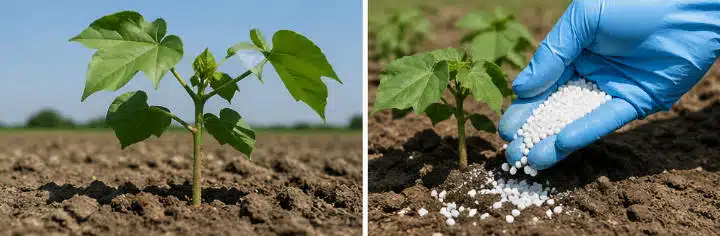
This is the best time to provide base nutrition if the soil is low in available nutrients. At this stage, fertilizer is usually placed in the root zone so the plant can access it early.
2. Early seedling stage
Once the seedlings are established, a second nutrition check helps determine whether the crop needs supplemental feeding. This is often the best time to correct weak growth before it becomes a bigger issue.
3. Early vegetative stage
As cotton begins to grow leaves and stems more quickly, nutrient demand rises. At this point, both soil feeding and foliar feeding can be used depending on the crop condition.
The key principle is simple: apply fertilizer before deficiency slows the plant down.
How to Apply Cotton Fertilizer Properly
If you want to know how to apply cotton fertilizer effectively, the most important thing is to match the fertilizer method with the crop’s growth stage and field condition. There is no single method that works best in every situation, but the following options are the most common.
1. Soil application
Soil application is the foundation of early cotton nutrition. Fertilizer is placed into the soil where roots can absorb it gradually. This method works well for major nutrients such as nitrogen, phosphorus, and potassium, especially when the soil test shows a real need.
Good soil application should focus on:
- even distribution
- correct placement near the root zone
- avoiding direct contact with young roots or seeds
- applying before rainfall or irrigation when possible
A common mistake is spreading fertilizer too far from the root zone. In that case, the plant may not absorb enough nutrients, and efficiency drops sharply.
2. Side-dressing
Side-dressing is useful after the crop has emerged and the root system has started expanding. It allows growers to supply nutrients closer to the active root area without overloading the seedling zone.
This method is often used when:
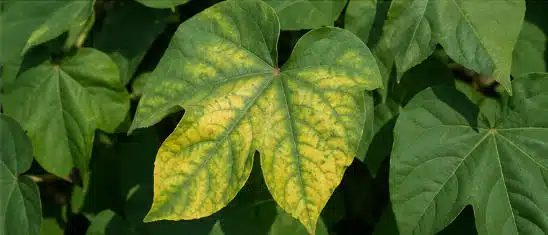
- the crop looks pale or slow
- early growth is uneven
- rainfall has leached nutrients
- extra nitrogen is needed for vegetative growth
3. Foliar feeding
Foliar feeding is an excellent support method, especially when cotton needs a quick nutrient boost. It does not replace soil fertilization, but it can correct short-term deficiencies and improve crop vigor.
This is where a proper cotton foliar spray guide becomes important. Foliar sprays should be used carefully, at the right concentration, and under the right weather conditions.
Cotton Foliar Spray Guide for Early Stage Use
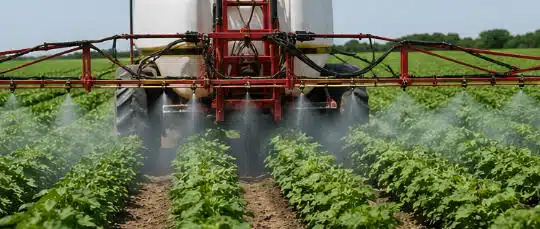
A cotton foliar spray is most effective when the plant can absorb nutrients through the leaves without stress. Foliar spraying is not meant to supply all nutrition. Instead, it is a fast correction tool that supports early growth.
When to spray
The best time is usually:
- early morning
- late afternoon
- cool, calm weather
- when leaves are dry and actively functioning
Avoid spraying during:
- strong sunlight
- high temperatures
- windy conditions
- rain risk shortly after application
What to spray
Early stage foliar products often contain:
- nitrogen
- micronutrients such as zinc, boron, iron, and magnesium
- amino acids or other supporting compounds
- balanced crop growth stimulants, depending on formulation
How often to spray
The frequency depends on crop condition and product type. In many fields, one or two sprays during the early stage may be enough, but stressed or nutrient-deficient crops may need more careful follow-up.
Important foliar spray tips
- Always follow the label instructions
- Do not mix incompatible products without checking compatibility
- Spray evenly for full leaf coverage
- Do not increase concentration beyond recommended levels
- Test a small area first if you are unsure about a new mixture
A good cotton foliar spray guide always emphasizes safety, consistency, and moderate dosage. More spray is not always better.
Understanding Cotton Fertilizer Dosage
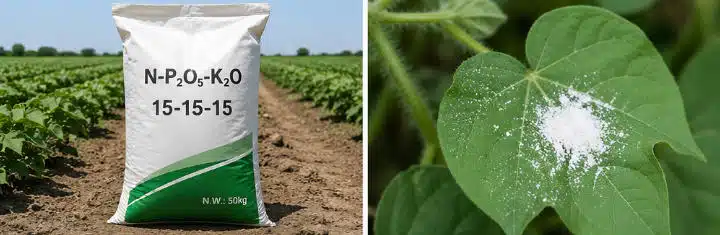
Correct cotton fertilizer dosage is one of the most important parts of early stage management. Too little fertilizer limits growth. Too much fertilizer can damage roots, create salt stress, or push the plant into imbalanced growth.
Because soil fertility, rainfall, irrigation, and local varieties differ, dosage should always be adjusted based on a soil test and field observation. Still, some general principles apply:
Use dosage based on crop need, not habit
Do not apply the same amount every season just because it worked once. Soil fertility changes. Weather changes. Yield goals change.
Start with soil analysis
A soil test helps you understand:
- nitrogen availability
- phosphorus status
- potassium supply
- micronutrient gaps
- soil pH and salinity
Avoid over-fertilizing young plants
Cotton seedlings are sensitive. Heavy fertilizer near the root zone can burn roots or reduce early establishment.
Split applications when needed
Instead of giving all nutrients at once, split feeding can improve efficiency and reduce loss. This is especially useful in sandy soils or in fields exposed to heavy rainfall.
Adjust for crop vigor
If cotton is growing well and leaves are deep green, the dosage may need to stay moderate. If the crop is weak or pale, a corrective program may be needed, but it should still be controlled and evidence-based.
In practice, the best cotton fertilizer dosage is the one that matches the crop’s actual demand at that moment.
Common Mistakes When Applying Cotton Early Stage Fertilizer
Even a good fertilizer product can fail if it is used incorrectly. Here are some of the most common mistakes growers make:
Applying too early or too late
If fertilizer is applied before roots can absorb it, nutrients may be lost. If it is applied too late, early stress may already have reduced crop potential.
Using excessive dosage
More fertilizer does not always mean better growth. Overuse can harm young cotton and lower efficiency.
Ignoring soil conditions
Soil pH, moisture, and texture all affect nutrient availability. A field that looks similar on the surface may behave very differently below ground.
Relying only on foliar feeding
Foliar spray is helpful, but it cannot replace a balanced soil nutrition program.
Spraying in poor weather
Foliar products work best under calm, cool conditions. Heat and wind reduce absorption and increase waste.
A Practical Early Stage Cotton Fertilization Strategy
A strong early program usually combines three layers of nutrition:
Base soil nutrition
This supports root growth and initial plant strength.
Targeted side-dressing
This helps when early growth needs additional support.
Foliar correction
This quickly addresses visible stress or micronutrient deficiency.
When these three parts work together, the crop often shows:
- stronger early establishment
- more uniform growth
- better leaf color
- improved resilience
- stronger yield potential later in the season
The best strategy is always a balanced one. Cotton responds well to nutrition, but it responds best when fertilizer is applied with precision.
Final Thoughts
Knowing how to apply cotton fertilizer correctly is not just about feeding the crop. It is about creating the right early environment for strong roots, healthy leaves, and stable development. The right cotton fertilizer dosage should always be based on field conditions, and a proper cotton foliar spray guide can help growers correct deficiencies quickly without wasting product.
For a pillar-page structure, this article can support your main product or solution page and help guide readers toward more detailed information on early stage cotton nutrition. By combining clear timing, balanced dosage, and careful application methods, growers can maximize the effect of cotton early stage fertilizer and build a stronger crop from the start.
