
Vegetable crops do not all need fertilizer at the same moment. In most gardens and commercial planting systems, the best results come from matching nutrition to the plant’s growth stage. That usually means feeding before planting, giving young transplants a gentle start, and applying additional nutrition during active growth instead of waiting until plants begin to struggle. For many annual crops, nitrogen is best applied immediately before or after planting, while phosphorus is typically applied before or at planting because it is less mobile in soil.
For growers searching for the best Vegetable Fertilizer, the real answer is often not just the product itself, but the timing behind it. A well-planned fertilizer program helps vegetables build roots early, grow steadily, and produce better leaves, flowers, or fruit later. That is why search intent around “Fertilizer for Vegetable,” “when to fertilize vegetables,” and “vegetable fertilizer schedule” is so closely tied to crop stage, soil condition, and harvest goal.
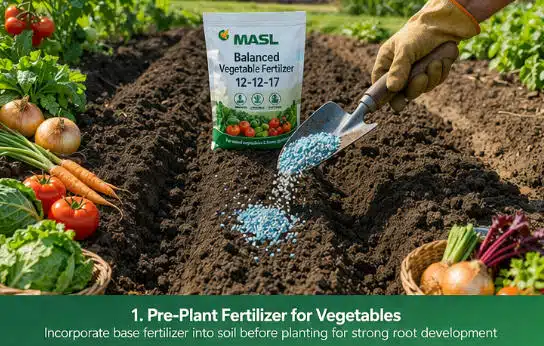
The Best Time Starts Before Planting
The first and often most important feeding happens before the crop goes into the ground. Pre-plant fertilizer is usually applied in the spring before the soild is worked into a seedbed, and dry fertilizer is commonly mixed into the top few inches of soil or incorporated before planting. This gives roots access to nutrients right away instead of forcing the plant to wait for a later rescue feeding.
This pre-plant timing is especially useful for growers using a balanced fertilizer for mixed vegetables or a pre-plant fertilizer for vegetables program. It creates a better foundation for leafy vegetables, root crops, and fruiting crops alike, while keeping the nutrient supply more even across the early growth cycle.
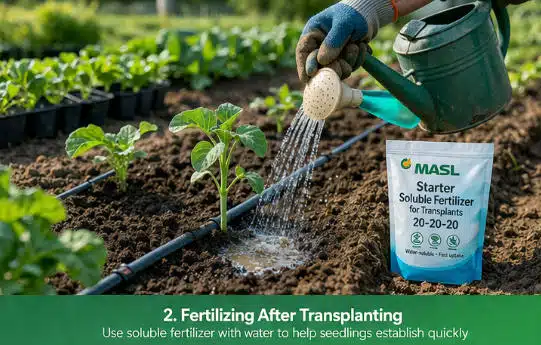
Seedlings and Transplants Need a Gentle Start
Young seedlings and transplants are sensitive, so the goal at this stage is support, not overload. Extension guidance recommends fertilizing spring seedlings and transplants with a soluble fertilizer mixed with water, then switching to a granular vegetable fertilizer as the plants grow. This approach helps roots establish quickly without overfeeding tender young plants.
If you are looking for fertilizing vegetables after transplanting, the best rule is simple: feed lightly, water in well, and avoid pushing too much nitrogen too early. Early nutrition should help the plant settle into the soil and start growing steadily, not produce soft, weak growth that later struggles in heat or fruiting stages.
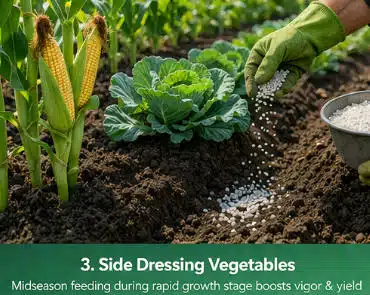
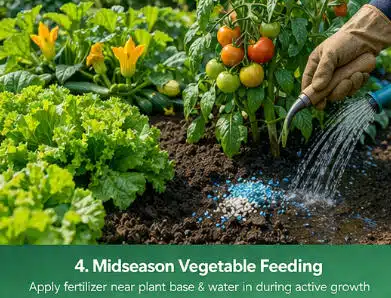
Midseason Feeding Matters More Than Many Growers Think
As vegetables move into rapid vegetative growth, nutrient demand rises. Oregon State Extension notes that many crops respond well to midseason feeding, and fertilizer should be applied near the base of plants and watered in. In practical terms, this is the stage when side dressing can make a visible difference in color, vigor, and overall plant performance.
This is where long-tail search phrases like side dressing vegetables, vegetable fertilizer timing, and midseason vegetable feeding fit naturally. Crops such as corn, onions, cabbage-family vegetables, and squash can respond especially well to this type of in-season nutrition, especially when growth is strong and the crop is preparing for final yield formation.
Do Not Wait Too Long for Fruiting Crops
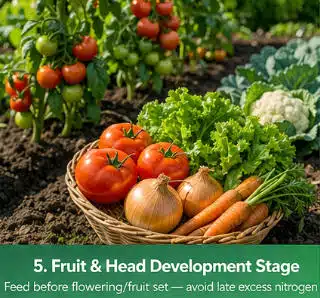
For fruiting vegetables, timing becomes even more important. University of Minnesota Extension explains that nitrogen should be applied when plants are ready to use it, and too much nitrogen late in the season can delay or reduce fruiting. In other words, the best fertilizer plan is not always the strongest one; it is the one that supports the crop at the right stage.
University of California ANR also notes that for cauliflower, for example, a portion of nitrogen goes at planting and the rest is applied in one to three sidedressings before heads begin to form. Applying nitrogen too late can cause quality problems rather than helping yield. That same principle applies broadly to many fruiting and heading vegetables: feed before the main reproductive stage, not after it has already started.
Crop Type Changes the Best Fertilizer Timing
The best Fertilizer for Vegetable crops depends on what you are growing. Leafy vegetables usually need steady support for foliage development, while root crops and fruiting crops need more careful balance so they do not put all their energy into leaves alone. That is why one fertilizer schedule rarely fits every vegetable bed perfectly.
For example, MASL Biotech’s vegetable product line includes crop-specific options such as a Leafy Vegetable Specialty Fertilizer and an Onion Early Stage Specialty Fertilizer, showing how different vegetable types may benefit from different nutrition strategies at different growth stages. MASL describes itself as a high-tech agricultural fertilizer manufacturer focused on innovative crop nutrition solutions for global agriculture.
A Simple Vegetable Fertilizer Schedule That Works
A practical vegetable fertilizer schedule can be kept simple:
Before planting, prepare the soil and incorporate base fertilizer. At transplanting, use a light soluble feed if needed. During active growth, side dress or top dress according to crop demand. Before flowering, heading, or heavy fruit set, make sure the crop is already well fed so nutrition supports production instead of disrupting it. This sequence matches extension guidance on pre-plant application, transplant feeding, and midseason fertilization.
For growers managing multiple crops, the most useful strategy is to think in stages rather than calendar dates alone. Cool-season greens, onions, tomatoes, squash, and mixed vegetable beds all have different feeding rhythms. A smart vegetable fertilizer schedule adjusts to those rhythms instead of forcing every crop into the same formula.
Common Mistakes to Avoid
One common mistake is feeding too late. Late nitrogen can encourage leafy growth when the crop should be flowering, heading, or ripening. Another mistake is applying fertilizer without watering it in, which reduces effectiveness and can stress plants. A third mistake is using the same feeding pattern for every vegetable, even though leafy crops, fruiting crops, and root crops often need different approaches.
Another mistake is placing fertilizer too close to seeds or roots. Extension guidance warns against direct contact between seed and fertilizer bands. Good placement matters as much as good product choice because the wrong placement can damage emergence or reduce early vigor.
Why Timing Is as Important as Product Quality
Many growers focus first on choosing the best Vegetable Fertilizer, but timing often determines whether that fertilizer actually performs well. A well-formulated product used at the wrong stage may deliver disappointing results, while a simple formulated product used at the right time can support healthier growth and better yield. That is why timing, placement, and crop stage should always be part of the fertilizer decision.
For MASL, this idea aligns with a broader crop nutrition approach: matching fertilizer solutions to vegetable type, growth stage, and production goal. That makes the brand message especially relevant for growers searching for reliable crop nutrition from a vegetable fertilizer manufacturer, a China fertilizer factory, or an OEM/ODM fertilizer partner.
The best time to apply fertilizer for vegetables is not one single moment. It begins before planting, continues carefully after transplanting, and becomes especially important during active growth and before key yield stages. If you feed too early, too late, or too heavily, the crop may not use the nutrients efficiently. If you feed at the right stage, however, vegetables can grow more evenly, stay stronger, and produce better harvests.
For growers looking for a smarter Fertilizer for Vegetable strategy and a practical best Vegetable Fertilizer solution, MASL Biotech offers crop-focused nutrition designed to support different vegetables through different growth stages.
